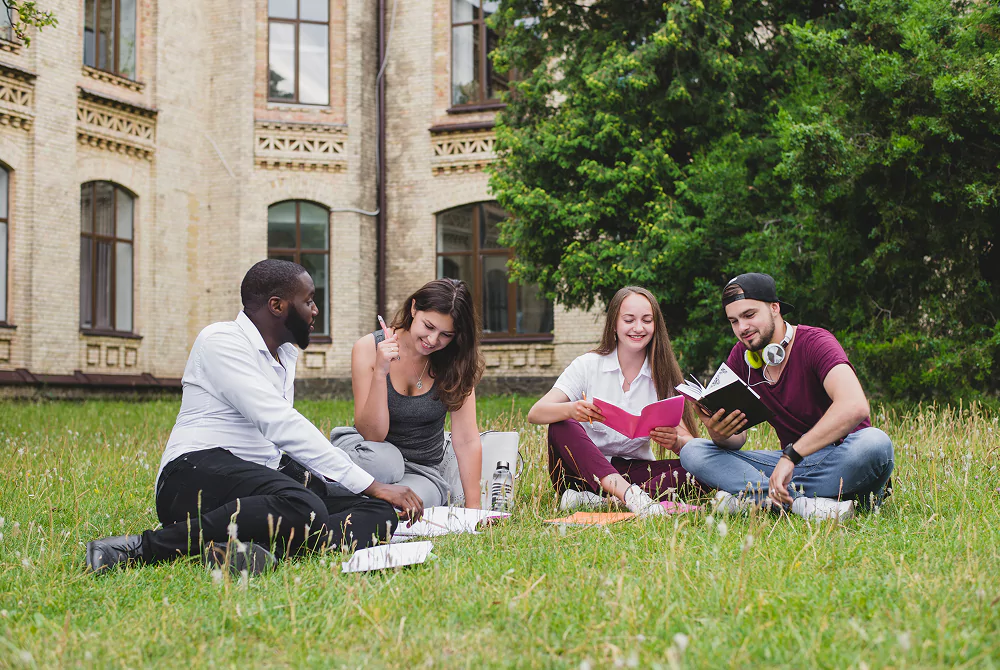
Most parents today feel the tension. On one hand, traditional school offers structure, socialization, and academic rigor. On the other, many parents sense something is missing—time together, deeper formation, and alignment with their family’s values. The hybrid model exists to bridge that gap.
A Better Rhythm for Learning
At its core, the hybrid model is simple:
- 3 days on campus
- 2 days at home
On campus days provide:
- Structured academic instruction
- Collaborative learning
- Mentorship from teachers
At-home days create space for:
- Reinforcement of learning
- Deeper conversations
- Real-life application
Research increasingly supports this kind of distributed learning. Studies on blended and hybrid education models show that students benefit from a mix of guided instruction and self-directed learning, often leading to improved engagement and retention.

Parents as Primary Educators
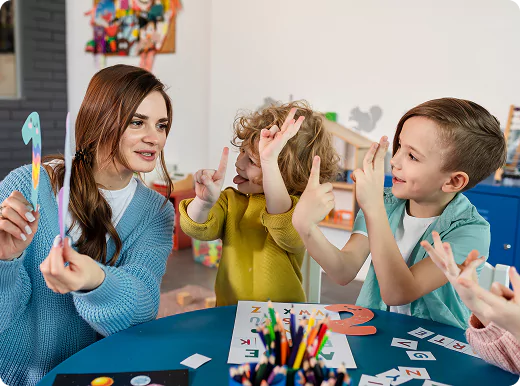
One of the most distinctive aspects of the hybrid model is this: parents are not sidelined, they are essential. Historically, education has always been rooted in the family. Scripture reinforces this clearly:
“You shall teach them diligently to your children…”
(Deuteronomy 6:7)
Modern research echoes this principle. Parental involvement has consistently been shown to be one of the strongest predictors of a child’s academic success and long-term development. The hybrid model simply restores what was always meant to be, which is that parents lead and teachers support the parents.
Small Groups, Deep Formation
Another defining feature is small class sizes. Instead of large, anonymous classrooms, students are known, guided, and challenged in a more personal environment. This allows for:
- Individualized attention
- Stronger relationships
- Character development alongside academics
Research from the National Education Policy Center and others has shown that smaller class environments can significantly impact student outcomes, especially in early years. But beyond outcomes, this is about something deeper: every child being seen, known, and formed.
More Than Academics
The goal of the hybrid model is not simply to produce high-performing students. It is to help form:
- Wisdom, not just knowledge
- Character, not just achievement
- Faith, not just information
This aligns with a growing body of research suggesting that non-cognitive skills—such as self-discipline, resilience, and moral development—are just as critical as academic performance for long-term success.
Is It the Right Fit?
The hybrid model is not for everyone. It is best suited for families who:
- Want to be meaningfully involved in their child’s education
- Value both structure and flexibility
- Care deeply about long-term formation, not just short-term results
For these families, it offers something rare: a model that aligns education with both conviction and calling.